| Chiricahua, AZ |
The age of the Universe is approximately 13.8 billion years.
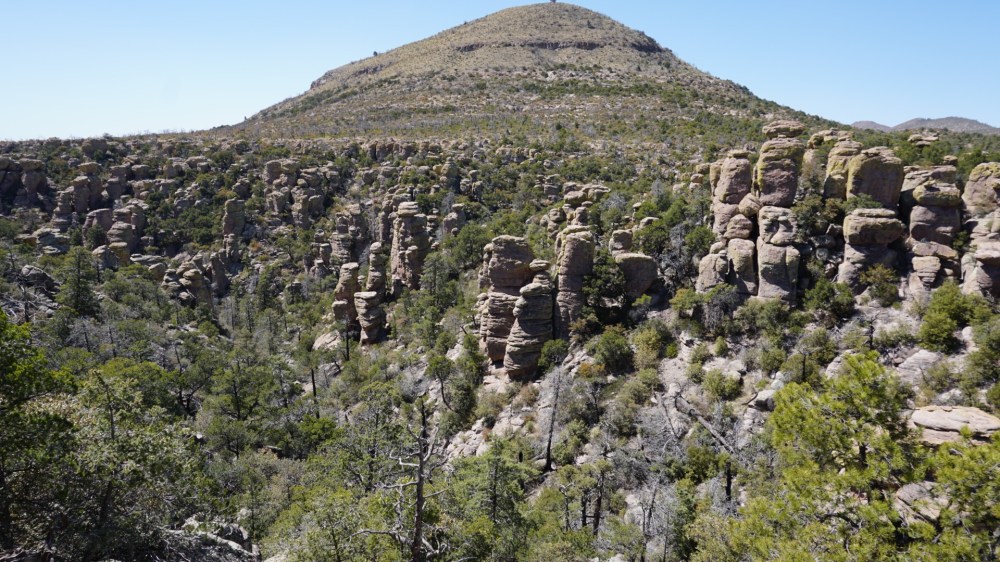
That thought popped into my head today as I toured the Chiricahua National Monument.
Where, approximately 27 million years ago, nature set in process what I got to experience today.
Taken from the National Park Services webpage on the monument:
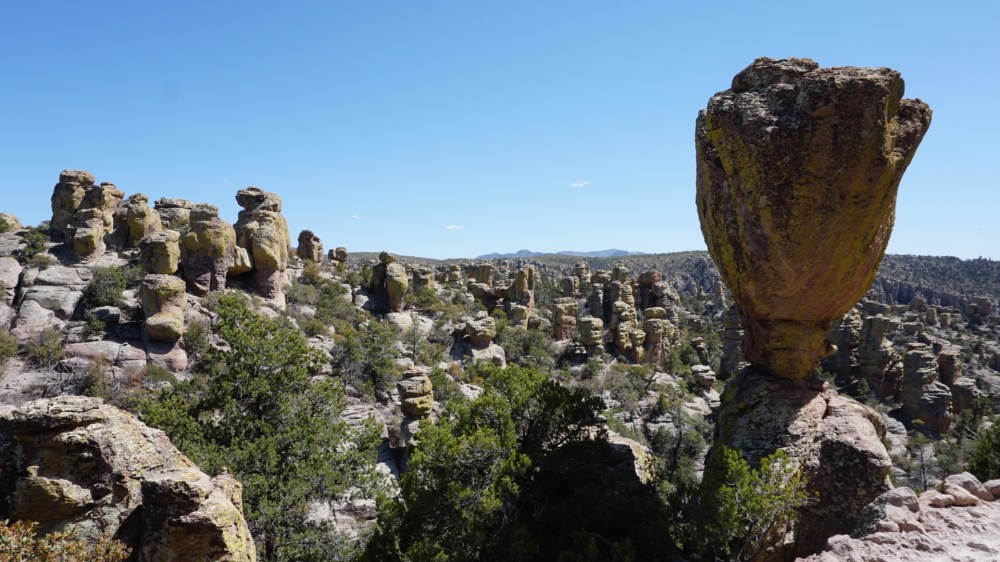
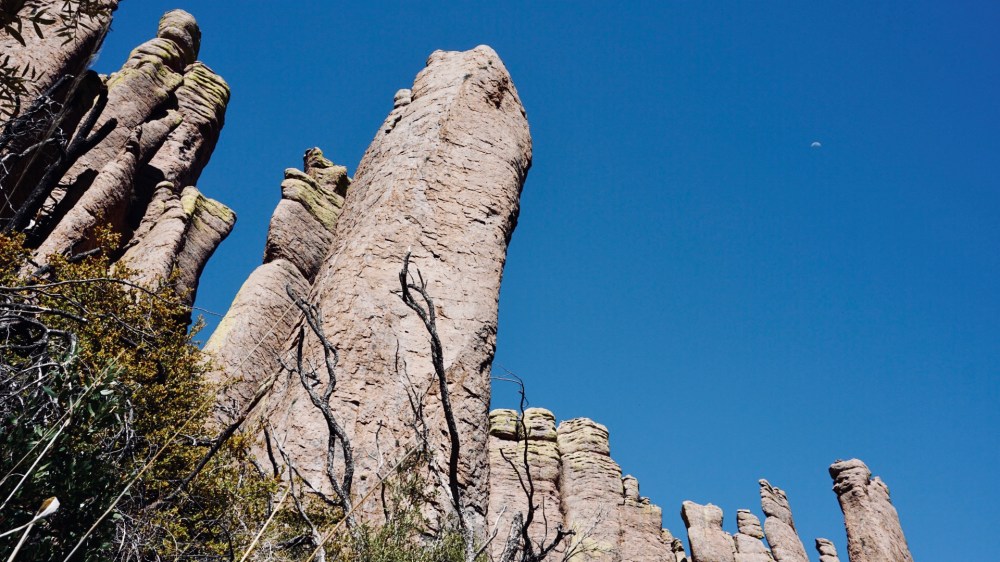
A cataclysmic volcanic eruption, roughly 27 million years ago, spewed ash and molten debris at super-sonic speeds and formed the approximately 12 mile wide caldera. Ash and debris settled and compacted, forming a thick layer of rock called rhyolite tuff. This rock layer has fissured and eroded over time, forming the spectacular rock pillars of Chiricahua National Monument.
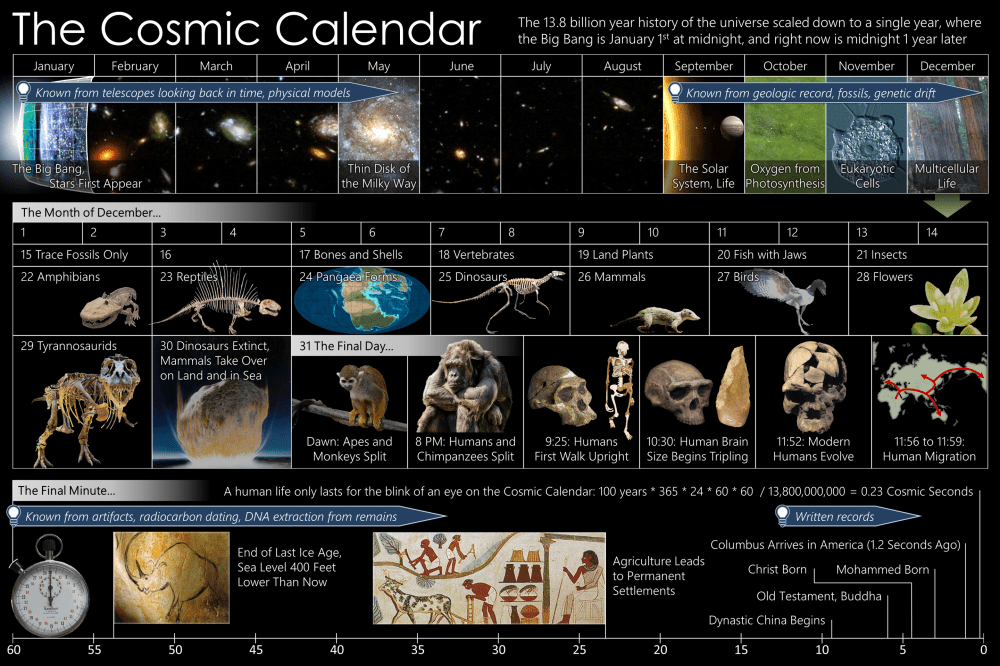
So, 27 million years ago is a pretty long time, but let’s use the Cosmic Calendar to put things in perspective.
The calendar is a simple concept, whereby you take the age of the universe, and stretch it out to fit on a standard 365 day calendar.
So, the Big Bang, took place at midnight on January 1st, and the present time is literally just before midnight December 31st.
On such a scale, there are roughly 437 years per second and about 38 million years per day. Which means…you got it…
The extraordinary rock formations at Chiricahua were set in process on December 31st on such a calendar.
Wow.
Ridiculous right?
Even more ridiculous is the fact that Christopher Columbus would have voyaged to (not discovered*) North America on December 31st 11:59:58 and most of modern human history has happened in the last second of the last day, on such a calendar.
The average human lifespan is somewhere around 80 years, which is a fairly long time, but on the cosmic calendar that 80 years equates to about 1/5 of a second.
Again, wow.
(*It is impossible to ‘discover’ a land in which people have been living for tens of thousands of years. That would be like me walking into your living room and saying I ‘discovered’ it, and am hereby claiming your house)
So yeah, that is what was going through my head as I toured the monument today.
The site is, in essence, a large bowl, in which you start at the top and work your way in a circular fashion downwards, before coming back up again.
Though it certainly wasn’t crowded, it was definitely a ‘tourist’ site and less of a hiking site. Fortunately most of those folks stopped on the upper part of the trail, before the grade steepened as it continued downward.
Which meant, as seems to be usual recently, that I had the majority of the 5 mile or so hike to myself.
The weather was still windy and cool – great for hiking – and certainly, not the norm in this part of the country. But save the sound of the wind, it was very quiet and thus I had plenty of time to work through my ‘place in the universe’ contemplations.
What continues to amaze me on hikes like this is how nature finds a way. The breadth of plant life in what used to be a volcanic crater was remarkable; including: pine trees, yucca and agave plants, cactus, and plenty more. Many of these trees and plants clung precariously to the edges of cliffs or rocks and plenty of the trees had spread their roots upon the tops of the rocks themselves. Some of the plants seemed as though they were growing literally out of the rock itself.
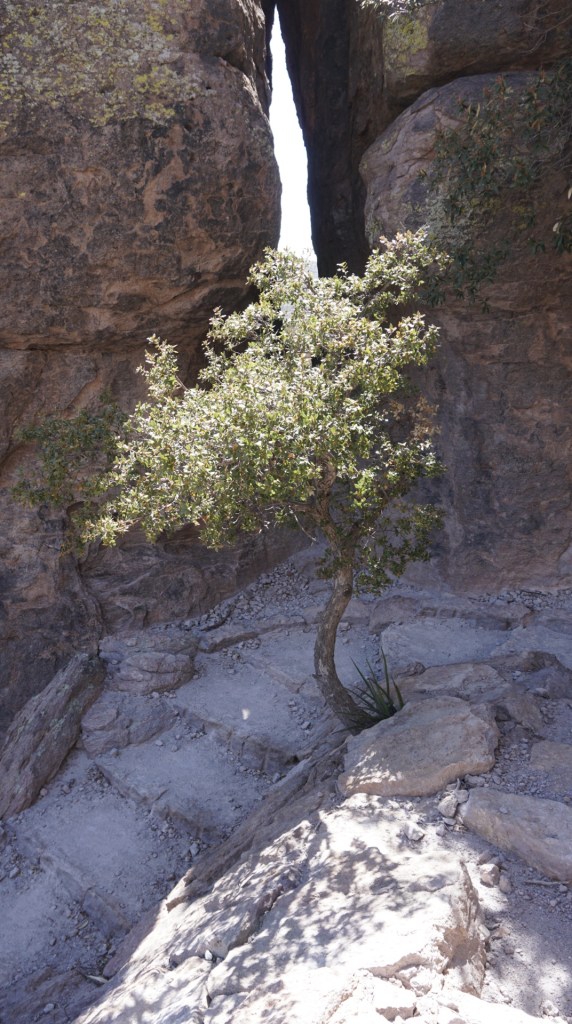
Ultimately some of them lost that battle and had tumbled down the sides of the canyon. Some of that demise was probably helped along by wildfire, of which there was plenty of evidence.
What was rather amazing is that though it had clearly been quite some time since wildfires had penetrated the area, every once in a while the wind would die down and you could still catch a whiff of that charred wood scent.
All in all, a tremendously unique site and hike. Kudos to the Civilian Conservation Corps for putting in the labor to make it accessible.
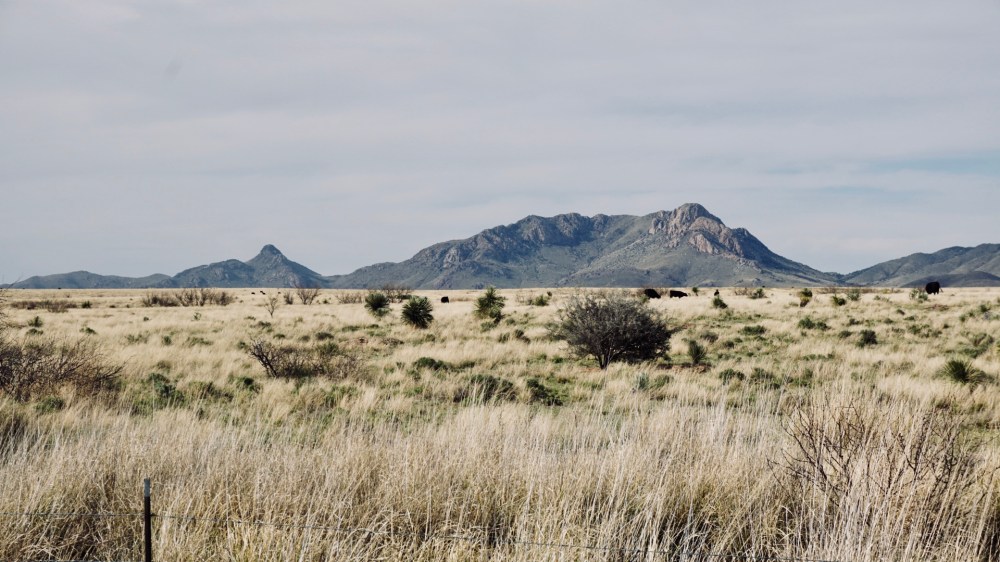
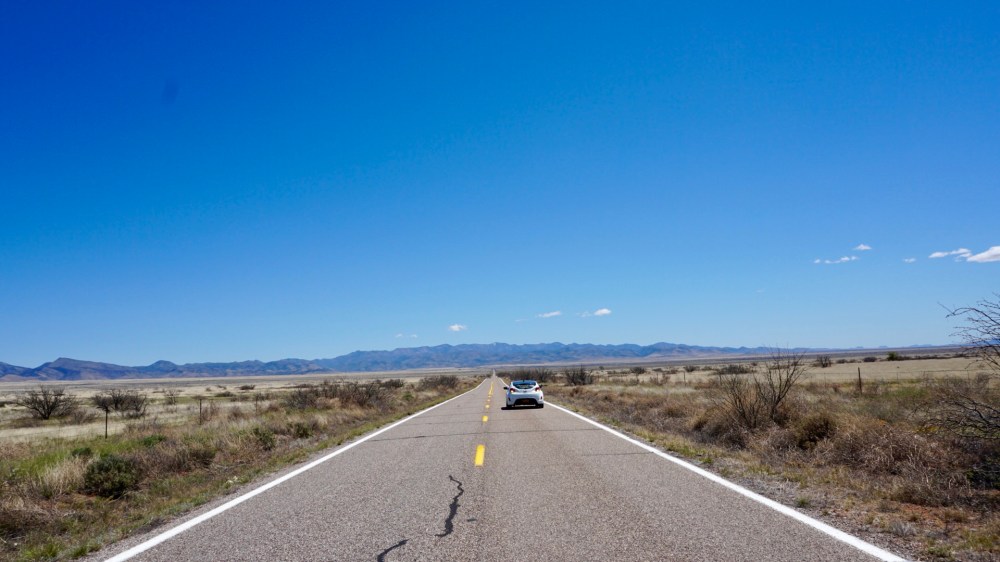
I’ve continually been amazed at just how ‘wide open’ the West is. This site for example, was a good 35 mile drive from the nearest town (and I use the word town, loosely) and the drive out there was visually stunning.
Dust devils danced under a blanket of clouds and in between laid nothing but practically uninterrupted views of prairie, mountains and really, not much else.
I definitely tried to remain conscious of the fact that I was hurtling along at 65 miles and hour or so; especially as the road had plenty of those unnerving moments in which you would hit the top of a rise and couldn’t – until the last possible moment – see what was on the other side.
On the way back from the monument, I caught site of some cattle grazing in an open field in front of a Bob Ross assemblage of mountains and clouds. So I pulled over, shot a couple of pictures and just watched them for a while, before heading off again.
I’ll let the pictures tell the rest of the story…
https://www.alltrails.com/parks/us/arizona/chiricahua-national-monument
 The Long Road